Kay Hare Art Home

Category

Studio Notebook

19 articles

The Name After the Paint: How a Canvas Gets Its Title

The Name After the Paint: How a Canvas Gets Its Title

A title can welcome a viewer in, send them down a side road, or politely step out of the way. In the studio, naming a painting is rarely a single stroke of genius — more often it is a slow negotiation between what the work looks like, what it remembers, and what it needs to be called on a wall label.

Paper Companions: The Small Packet That Leaves With a Painting

Paper Companions: The Small Packet That Leaves With a Painting

When a painting goes out into the world, it rarely travels alone. Tucked beside the canvas is usually a modest folder of notes, instructions and handwritten lines — the paperwork that helps a painting keep its story. Here’s what tends to be inside, why it matters, and how to look after it once the wrapping comes off.

Sweepings, Blue Chips and Curled Tape: A Studio Floor’s Own Notes

Sweepings, Blue Chips and Curled Tape: A Studio Floor’s Own Notes

A season of sweepings beneath the easel turns out to be a second sketchbook: dried flakes, tape curls and offcuts that record revisions the finished painting hides. This is a collector’s guide to reading studio debris without turning it into a museum label.

The Six-Inch View: What a Painting Keeps for the Very Curious

The Six-Inch View: What a Painting Keeps for the Very Curious

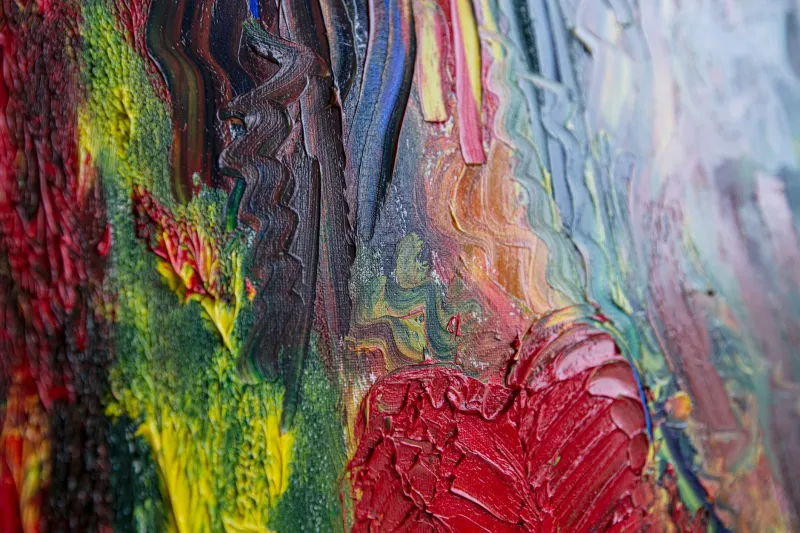
Standing back is only half the story. At six inches, a painting gives up its brushwork, its happy accidents and the small decisions that never survive a room-distance glance. A studio note on building pictures for both readings — and on helping gallery visitors lean in without feeling watched.

What the Finished Painting Is Sitting On

What the Finished Painting Is Sitting On

Before a canvas gets its final surface, it has a first hour — a warm ground, a rough sketch, sometimes an abandoned composition. I photograph those layers before they vanish, because they quietly explain the painting that ends up on the wall.

Little Rooms, Big Presence: Living with Small Paintings

Little Rooms, Big Presence: Living with Small Paintings

Small paintings are not warm-ups or footnotes. They are complete works with their own scale, presence and practical demands. A studio-side look at making, framing and hanging little canvases in British homes where walls are shared with radiators, shelves and real life.

Turn It Over: Reading the Reverse of a Painting

Turn It Over: Reading the Reverse of a Painting

The front of a painting gets the attention, but the back is where the paperwork of a life in art quietly accumulates. A practical, slightly nosy guide to signatures, gallery stickers and studio scribbles — and why UK collectors should photograph them before anything else.

The Wall Has Weather: Hanging Paintings in British Light

The Wall Has Weather: Hanging Paintings in British Light

British daylight is never a fixed setting. It shifts from silver to glare in an afternoon, and a painting can change with it. Here is a practical, room-by-room way to test a wall before you drill, and to ask the right questions about glass, varnish and spotlights.

The Homecoming Checklist: Caring for Work Once the Show Is Over

The Homecoming Checklist: Caring for Work Once the Show Is Over

When the last label is peeled off and the van doors shut, a painting’s exhibition life ends and its care plan begins. A practical, slightly rueful look at condition checks, British storage, rehanging decisions and the paperwork that follows a busy autumn show.

Count the Canvas, Then Count the Cost: How a Painting Gets Its Price

Count the Canvas, Then Count the Cost: How a Painting Gets Its Price

A painting's price is not a dare or a secret handshake. It is a working number made from materials, time, framing, exhibition costs and a hundred small decisions. Here is a candid look at how the figure gets built — and how to ask about it without the awkwardness.

When the Studio Door Stays Open: Notes from a Working Weekend

When the Studio Door Stays Open: Notes from a Working Weekend

Opening a working studio to the public is not the same as hanging a gallery show. It is a day of wet paint, odd questions, half-finished canvases and surprising conversations. Here is what I have learned about preparing the room, showing unfinished work and keeping the studio yours afterwards.

The Boot-Space Syllabus: Packing Paintings for a UK Gallery Run

The Boot-Space Syllabus: Packing Paintings for a UK Gallery Run

Every exhibition begins with a small act of logistics: measuring a boot, borrowing a trolley and hoping the weather holds. Here is a painter’s packing list for moving work around the UK, from foam corners to insurance paperwork, with the boot-space maths included.

A Sky Full of Greys: Choosing Colour in a British Studio

A Sky Full of Greys: Choosing Colour in a British Studio

British daylight is not one thing, and it changes what a painting seems to be. This is how overcast skies, warm whites, muted greens and the three-light test shape the work in Kay Hare’s studio — and what collectors can learn from viewing a painting at different times of day.

Field Notes and Long Ears: The Hare That Keeps Coming Back to My Easel

Field Notes and Long Ears: The Hare That Keeps Coming Back to My Easel

A hare drawn in six hurried lines has a way of staying with you. This studio notebook looks at why the hare keeps returning to my paintings, how field sketches and British folklore feed into the work, and what collectors and gallery visitors might spot when they look a little closer.